HIREP HRP-T1000 D
Description
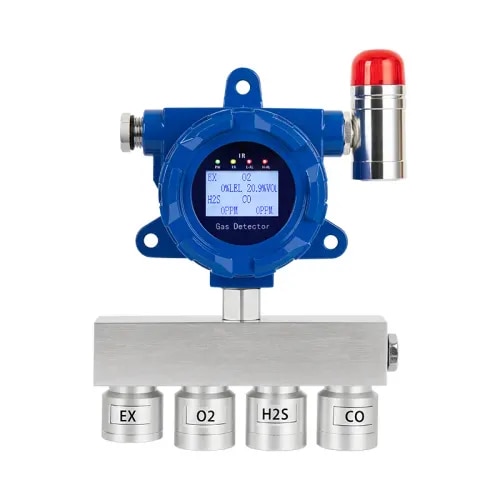
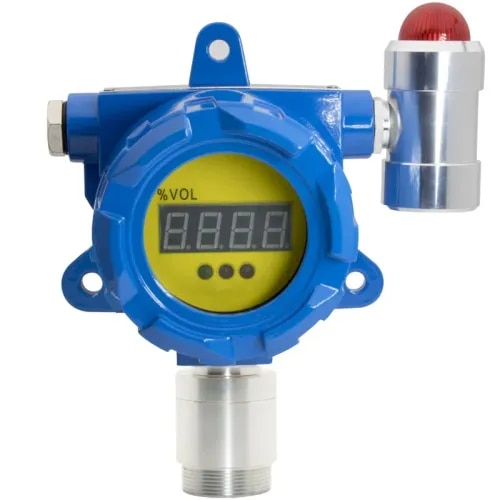
This plug-and-play industrial safety device integrates detection, display, and alarm functions. It is designed for independent gas monitoring in small-scale scenarios and can complete the full monitoring and early warning tasks without the need for an external controller.
SIL 4 Certification
CE Certification
Ex Certification
PA Certification
FC Certification
HRP-T1000-D stand-alone gas detector is a plug-and-play industrial safety device that integrates detection, display, and alarm functions. It is tailored for small-scale scenarios such as small workshops, laboratories, warehouses, and office buildings. It solves the core pain points of traditional fixed detectors, such as the need for external controllers, complex installation, and high cost. It enables a single unit to independently complete real-time monitoring and early warning of gas leaks, making it an ideal choice for small-scale gas safety protection.
Product Advantages: Plug and play, no external controller required, easy installation, low cost, integrates detection, display, and alarm functions, independent early warning, flexible power supply, multiple installation methods, high reliability, low maintenance cost, and supports customization.
This product is widely used in small-scale scenarios such as small chemical workshops, laboratories, warehouses, office buildings, restaurant kitchens, and power distribution rooms. It is especially suitable for users who need independent gas monitoring, have limited installation space, and relatively tight budgets, achieving efficient gas safety protection.
1. Minimal maintenance and second-level replacement.
This is its greatest advantage. When the service life of the sensor expires or is damaged, it is not necessary to disassemble the casing of the whole machine and use an electric soldering iron or screwdriver. Maintenance personnel only need to pull out the old sensor module like a USB flash drive and insert a new module. The whole process usually takes less than 1 minute, which greatly reduces the maintenance difficulty.
2. On-site calibration-free, out-of-the-box use
Traditional sensors usually need to be calibrated with standard gas after replacement. However, the intelligent module with socket has been precisely calibrated when it leaves the factory, and the calibration data is stored in the module. After being plugged into the host computer, the system will automatically identify and read the data, and there is no need for secondary calibration on site, which truly realizes “plug and play” and saves the cost of gas labeling and operation time.
3. Low cost of spare parts management
For factories with various gas detection needs, traditional equipment needs to reserve different models of the whole machine. However, the equipment with slot design usually has a universal slot interface. You only need to reserve the general sensor module, so you can meet the detection requirements of different positions and different gases, and you don't need to reserve the whole machine, which significantly reduces the occupation of inventory funds.
4. Flexible configuration, one machine with multiple functions
The host of this equipment is usually a universal “base”. You can install a combustible gas sensor on the slot according to the current monitoring requirements; If toxic gases need to be detected next month, just replace the module on the slot. This modular combination makes the equipment highly adaptable and avoids idle waste of the equipment.
5. Intelligent identification and life management
Plug-in modules usually have built-in smart chips, and the host can automatically identify the type, range and serial number of the inserted sensor. The system will automatically record the service time of the module, and when the sensor reaches the end of its life, it will automatically prompt to replace the module in a specific slot, without having to memorize and calculate the calibration period manually, thus realizing intelligent life cycle management.